

| Wee Hur Holdings this week joined the Phillip Securities webinar, where Goh Wee Ping, the Chief Investment Officer (CIO), gave a lowdown on the company's history and transformation. It started way back in 1980 as a construction firm, focusing only on that business for 28 years until 2008, when it listed on the SGX after which it ventured into property development in Singapore. Now, Wee Hur (market cap: ~S$660 million) is a broad-based business powerhouse, deep into property development in Australia as well, worker and student dormitories and even fund management, among other things. 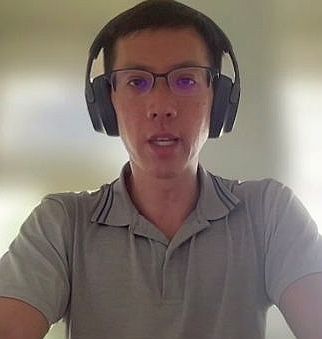 Goh Wee Ping, 39, CIO of Wee Hur Holdings and CEO of Wee Hur Capital. He is a second-generation member of the founding Goh family that controls Wee Hur Holdings.A noteable milestone: the divestment of its Australian purpose-built student accommodation (PBSA) assets, which catalysed a 70% run-up in the stock year-to-date. Goh Wee Ping, 39, CIO of Wee Hur Holdings and CEO of Wee Hur Capital. He is a second-generation member of the founding Goh family that controls Wee Hur Holdings.A noteable milestone: the divestment of its Australian purpose-built student accommodation (PBSA) assets, which catalysed a 70% run-up in the stock year-to-date. The webinar featured commentaries from the CEOs of the construction division (Andy Lu) and property development (Goh Chengyu), outlining strong order books, new projects like HDB developments, a hotel and an international school. Management stressed an optimistic outlook on the demand for construction, Singapore residential property, and workers' dormitories, while also highlighting the strategy of diversification into adjacent asset classes -- such as hotel and Australian land subdivision. |
Below are excerpts from the Q&A session. The content has been edited for brevity and clarity.
| Construction business |
Q: Regarding the construction order book : Do you have any intention to increase that and what's your capacity utilisation?
Andy: With new projects coming on (2 HDB projects, Upper Thomson GLS, etc), our orderbook will exceed $1 billion.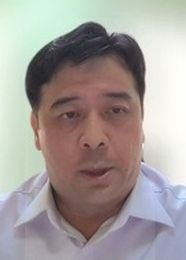 Andy Lu, CEO of Wee Hur ConstructionNext year, we will be looking to add one or two projects at reasonable margin because we currently are almost full. We have two projects we will be finishing next year, so we are also looking to replenish.
Q: What is the competition from Chinese players?
Andy: Singapore is very open, right? Any foreign company can set up in Singapore and operate. We see a lot of influx of Chinese construction companies as well as property companies. This competition, no matter who we are competing against, is no longer just based on price.
What we need to do is to upgrade ourselves, make sure that we are delivering quality projects so that we can compete against these players, not just based on price, but based on our brand name, our quality as well as a reasonable margin. PQM (price, quality, method) applies to all public sector projects.
Generally about 60% is based on the tender price, and 40% on a quality score which comprises factors like safety record, quality record, whether you were able to complete projects on time, etc. It is important for us to focus on how we manage our projects and execute well so that we can win projects even though we may not be the lowest tenderer.
| Accommodation business |
Q: What's the occupancy of Pioneer Lodge's 3.1K beds currently?
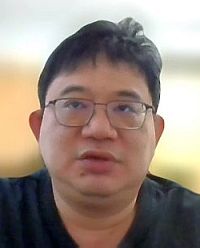 Goh Chengyu, CEO of Wee Hur DevelopmentGCY: The 3.1K beds are our phase one and is currently fully occupied. As for phase two, we will be able to start operating hopefully by the middle of this month. We have a long list of committed tenants already.
Q: Any update regarding a lease extension of the Tuas View dormitory?
GCY: Yes, our conversation with JTC has begun, but there's no 100% certainty. I think we have to wait till next year before we can have some certainty on the result.
Q: Any plans to apply your PBSA (purpose built student accommodation) expertise in other locations besides Australia, such as Singapore?
GWP: We could. But it's a question of where are the opportunities? There are multiple opportunities everywhere. We still see a lot of opportunities in the Australian market and therefore this will be where we spend 80% of our time next year.
For the rest of the 20%, we will explore where the network brings us to. Again, like how we went into our previous ventures, we will go in small, we go in prudent, we take our time to prove ourself up. And then if it makes sense and if we are sure of our capabilities, then we are going in a big way.
Q: Why did you choose Australia over some neighboring countries and how do you see the student-dorm business in Australia versus UK?
GWP: I think it'll be a long conversation for me to explain. Australia is a developed country, it has its legal system based in Commonwealth law. So, that makes doing business quite predictable and quite understandable. And most importantly, we are doing real estate and land titles need to be indefeasible.
Between Australia and UK, this conversation is easier. Our HQ is in Singapore. Australia is 7 hours flight away. Time difference, two to three hours. That's very manageable.
If you're talking about UK, the flight time is 11, 12 hours, pretty far away. And then the time difference, it's 6 or 8 hours. The further away from us, I think the less keen we are from an operating business point of view.
| Hotel business |
Q: What is the business model for the hotel business? Who are the target audience and how much capex is expected for this project?
GCY: We just have a hotel management agreement with DoubleTree by Hilton. We are very clear that we are just the asset owner and we don't do the day-to-day operations. This separation allow us to leverage on Hilton's global operating expertise while we focus on the asset ownership and value creation of this asset, which is our core strength.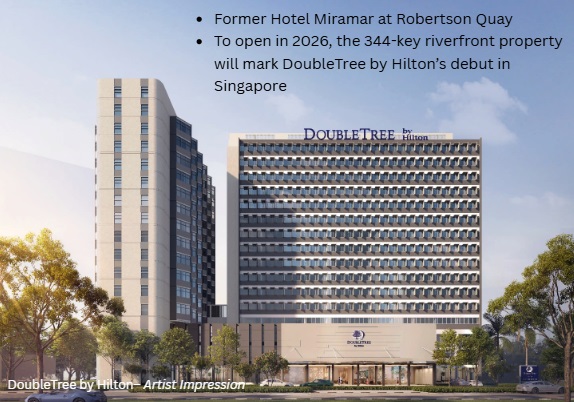
Target audience will be tourists, business travellers, and those, and of course, the existing Hilton network people. We can't disclose how much we will be spending, but this is an asset enhancement, it is not a total redevelopment. The capex will be just for upgrading the rooms and commercial podiums mostly.
| Miscellanous |
Q: Details of the drawdown on the S$250 million Medium Term Note Programme?
GWP: It's going into all our Singapore dollar-denominated projects -- our Upper Thompson GLS, it's going into the international school project, it's going into Hotel Miramar.
Q: In terms of cash flow management in the business, what are the issues you have faced in the past?
GWP: I don't think we have faced major cash flow issues. You have cashflow issues because you can't borrow from a bank or you misjudge certain things or you have permanent loss of capital. None of these has happened to us in a major way. Our debt currently, other than the MTN that we have gotten, it's very minimal. We don't borrow from private credit. We have not had to borrow from family ever.
Q: What's your dividend policy?
GWP: We do not have a dividend policy. Since we got listed, every year, we gave dividends. Now that our share price is much more elevated, there is some thought and intent to ensure the dividends grow in line with the growth of the company. Fundamentally, we want to pay dividends every year.
|
Q: How will you describe the main catalyst to drive profits in the next two years? GWP: Construction will be a strong cash flow generator, a strong profit generator. Our workers' dormitories will also be a strong cash flow and profit generating business. |
 → See also: More Than Just Construction: WEE HUR Continues to Evolve into a Multi-Asset Investor
→ WEE HUR: "The market has yet to price in this multi-pronged growth story," says analyst initiation report


